
Draft article — awaiting practice review.
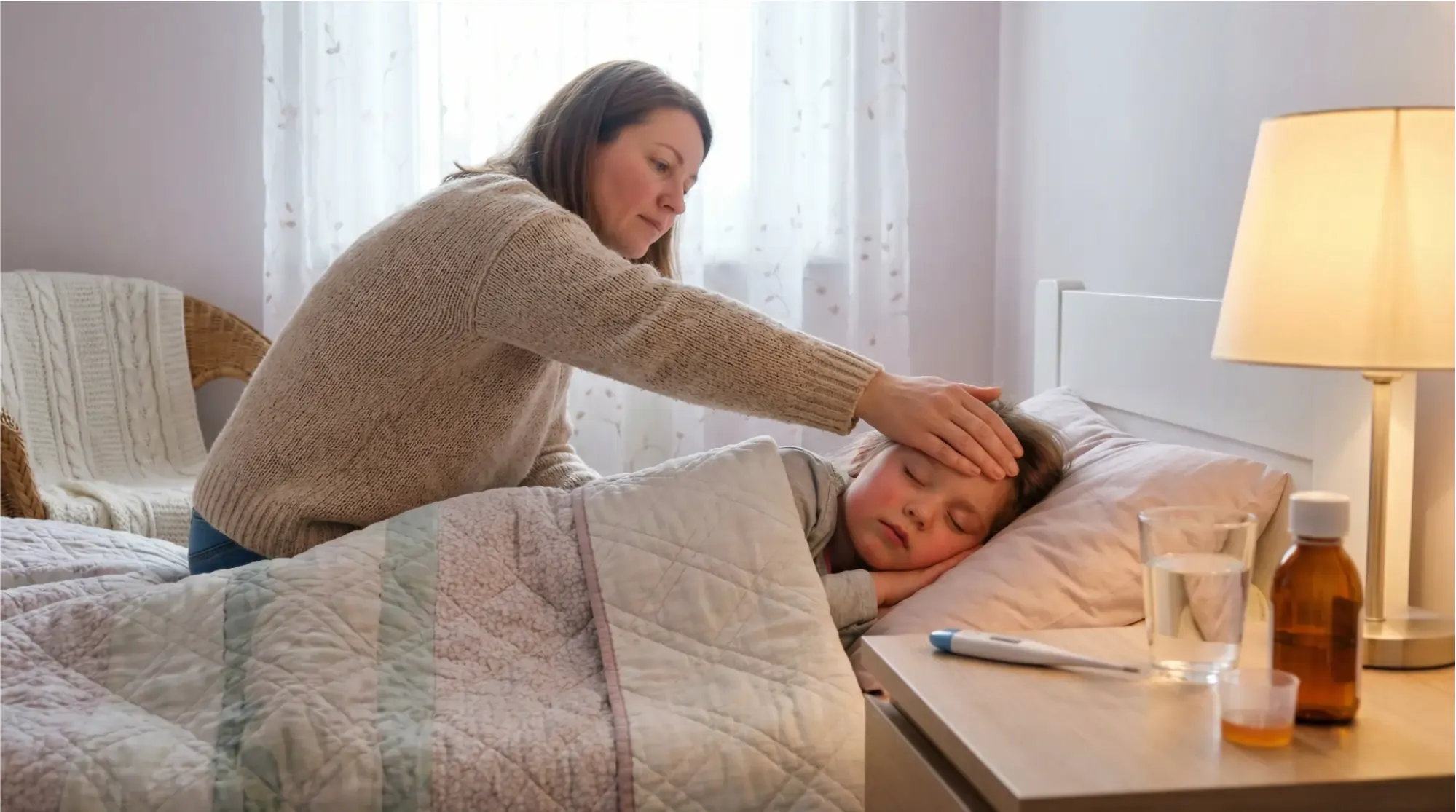
When a child feels hot, a thermometer and a look at how they are behaving answer different questions. Take their temperature if you can. Also notice whether they wake and respond as usual, how easily they breathe and whether they are drinking. Seek emergency help straight away if you see the warning signs below.
Emergency warning signs
Call 999 if your child has a stiff neck, a rash that does not fade under a glass, difficulty breathing, blue or grey colour, is hard to wake or is not responding normally. A first seizure also needs emergency help. Do not wait for an online appointment. The NHS fever guide lists further emergency signs.
When to call 111 about a child’s temperature
Seek urgent advice if:
- A baby under 3 months has a temperature of 38°C or above, or you think they have a fever.
- A baby aged 3 to 6 months has a temperature of 39°C or above, or you think they have a fever.
- Fever lasts 5 days or more.
- Your child has signs of dehydration, is not their usual self or you are worried.
Contact an urgent GP service or call 111 in England, Scotland or Wales. In Northern Ireland, contact your GP or the local GP out-of-hours service. Use 999 for an emergency anywhere in the UK.
What to watch while caring for your child
If you call for advice, have your child’s age, most recent temperature and the time it was taken to hand. Say how they are breathing, whether they are drinking and how alert they seem compared with usual. Mention any rash and medicines already given. If there are emergency signs, call straight away.
NICE’s fever guideline for under-5s explains that the assessment considers several signs together. In children older than 6 months, temperature alone should not determine the risk of serious illness. Fever lasting at least five days needs assessment, including consideration of Kawasaki disease.
If your child seems worse after you have already sought advice, ask for help again. A previous reassuring assessment does not mean new symptoms should be ignored.
Comfort and medicines
Offer fluids regularly and check your child during the night. Avoid both excessive wrapping and stripping them to cool them; do not sponge them down. Keep them at home while they have a fever.
Fever medicine is intended to relieve distress, not just change a thermometer reading. NICE advises considering either paracetamol or ibuprofen for a distressed child, and not giving both together. Do not alternate them unless a health professional advises it. Medicines to lower fever do not prevent febrile seizures.
Always check that a product is suitable for your child’s age and circumstances and follow its instructions. Ask a pharmacist or clinician if unsure. Do not give aspirin to children under 16. See the NHS medicine cautions before giving treatment, particularly for young babies or a dehydrated child.
Can an online GP assess a child with fever?
A discussion can help establish what is happening, but a child may need observations or an examination in person. Do not use a routine online appointment to delay urgent assessment. Read about children and family consultations and the limits of online GP care.
For a non-urgent conversation, have the child with you and prepare their age, symptoms, temperature readings and medicines information. Explain what has changed and what worries you most.
References
Clinical review pending
For review by Dr Amal El-Hawari
MBBCH, MRCPCH, MRCGP · Full registration with the GMC
This draft is awaiting Dr Amal’s clinical approval. A review date will be added after sign-off.
General information only; this article does not replace an individual medical assessment.